How to combine wood and stainless steel in kitchen design
Wood and stainless steel work particularly well together in kitchen design, creating a natural contrast between warmth and precision. By varying wood tones, steel finishes and proportions, the combination can create everything from warm Mid-Century Modern kitchens to contemporary spaces with a minimalist Scandinavian aesthetic.
Here, we explore five ways to combine wood and stainless steel – and how different choices in tone, finish and proportion can shape the overall character of the kitchen.
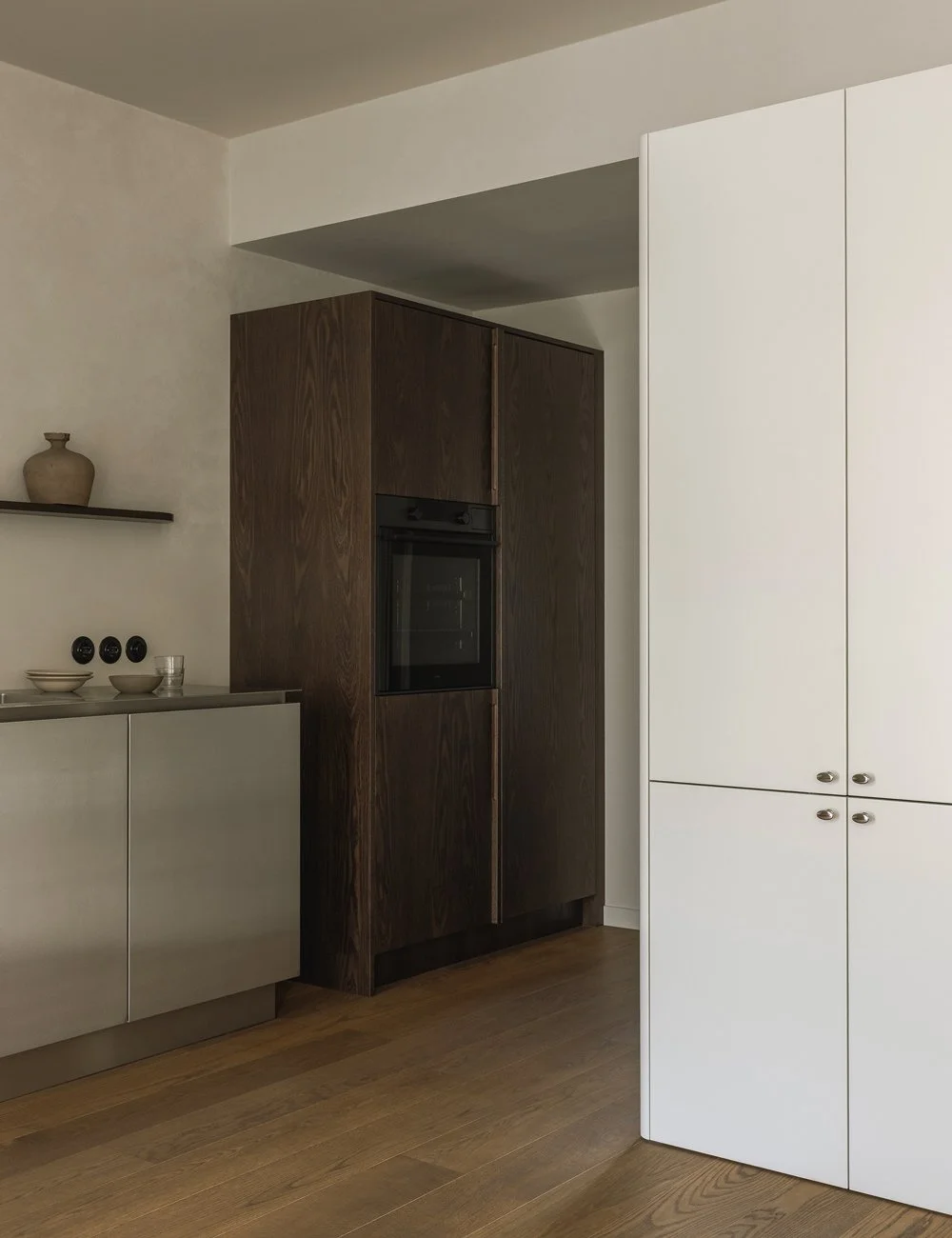
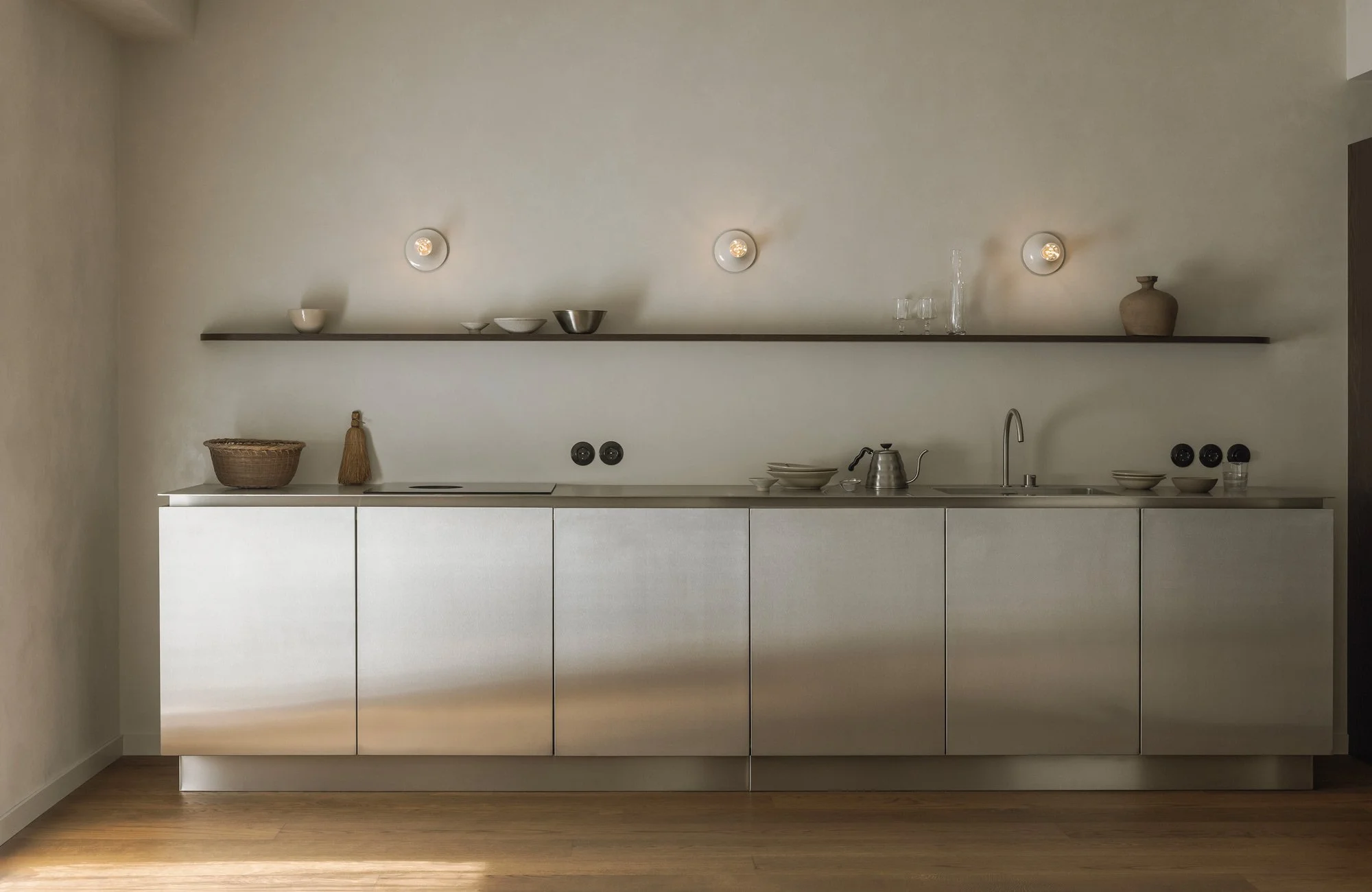
Antique stainless steel cabinetry is balanced by black-brown oak, soft white and warm oak flooring, creating a layered material palette with a distinct architectural character.
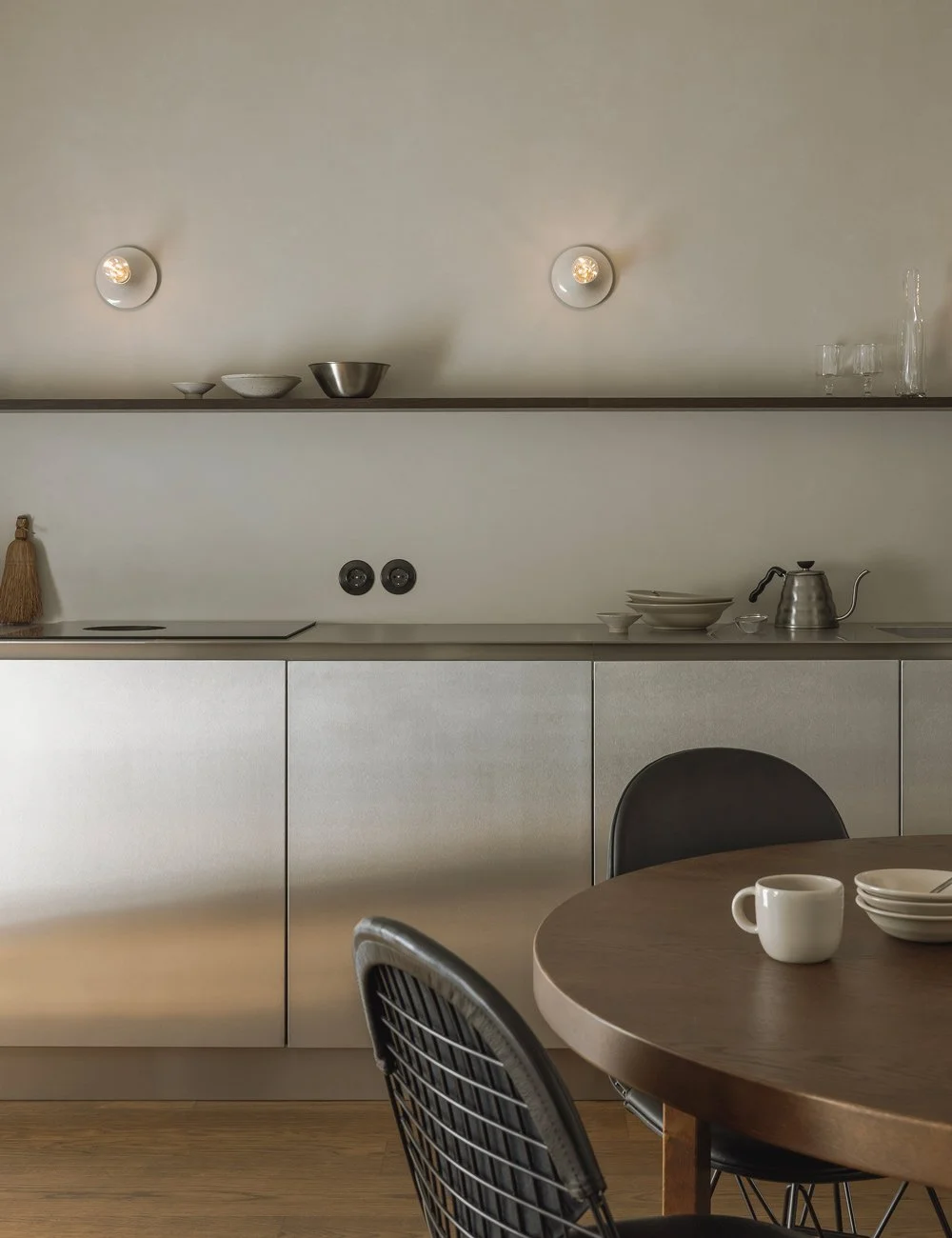
The open shelf in black-brown oak echoes the cabinetry and extends the clean, horizontal lines across the kitchen, bringing the contrasting materials together.
Antique stainless steel with black-brown oak and soft white
Antique stainless steel takes centre stage in this kitchen, with a full run of steel cabinetry creating a clean, architectural expression. Black-brown oak introduces depth and warmth, while soft white cabinetry and matt walls keep the overall palette light and balanced.
Rather than competing with the steel, the dark oak acts as a grounding element, adding richness to the otherwise restrained material palette. Warm oak flooring brings another layer of wood into the space and creates a natural transition between the contrasting finishes.
Design tip: Let the wood reappear in architectural details. Here, the open shelf picks up the black-brown oak of the cabinetry, extending its strong horizontal lines and visually connecting the different parts of the kitchen.
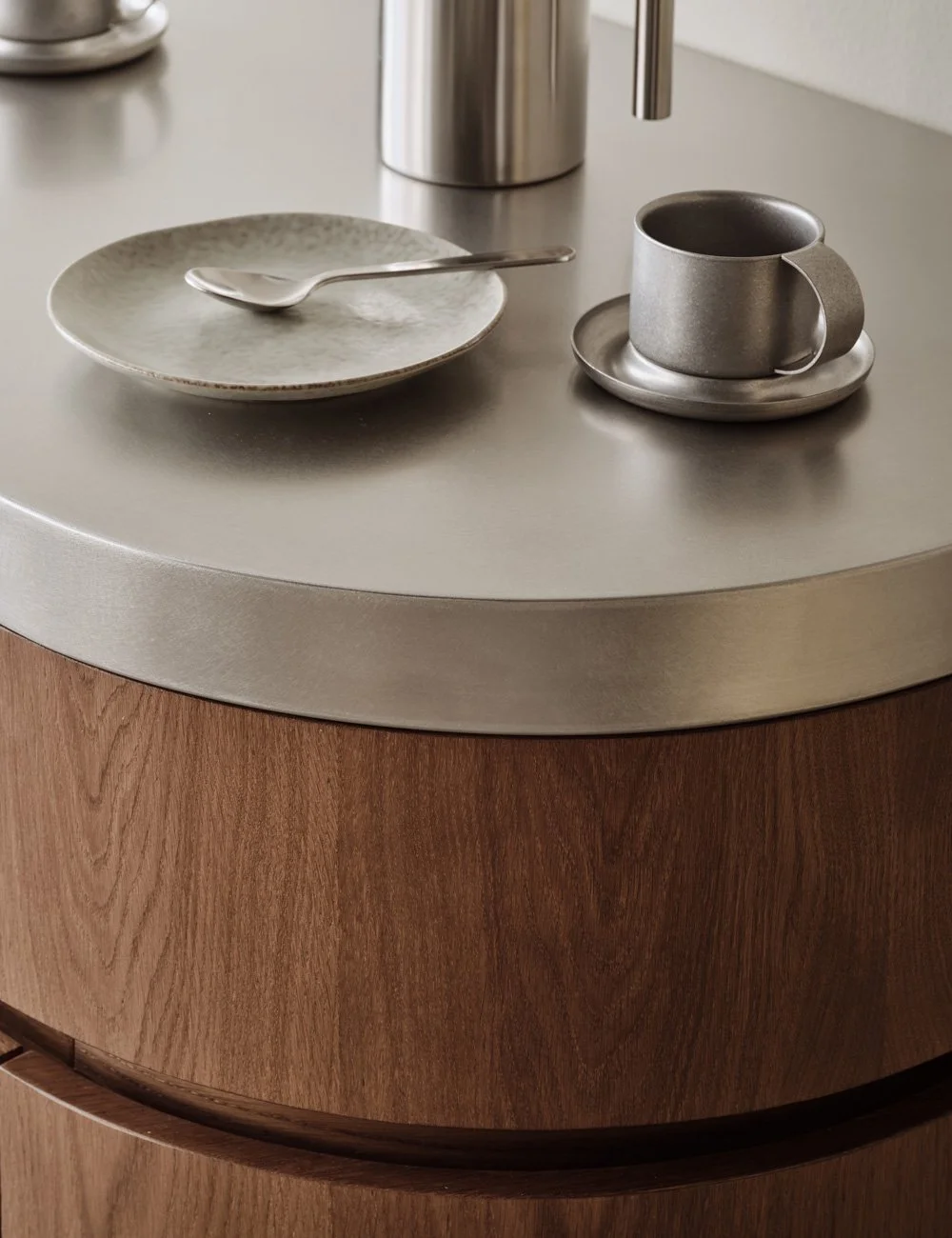
The antique stainless steel kitchen worktop, with its beautifully curved edges, creates a subtle contrast to the light brown oak.
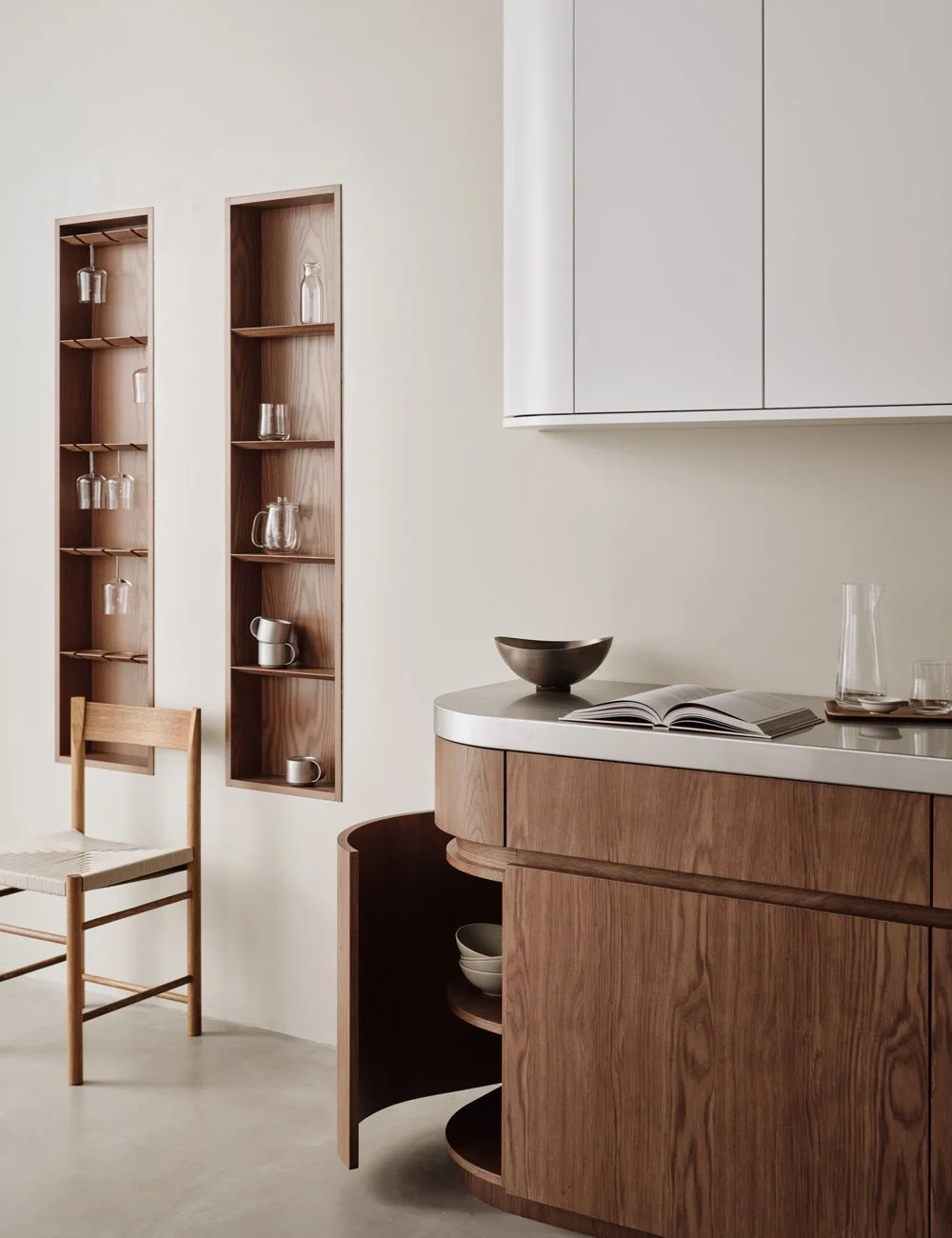
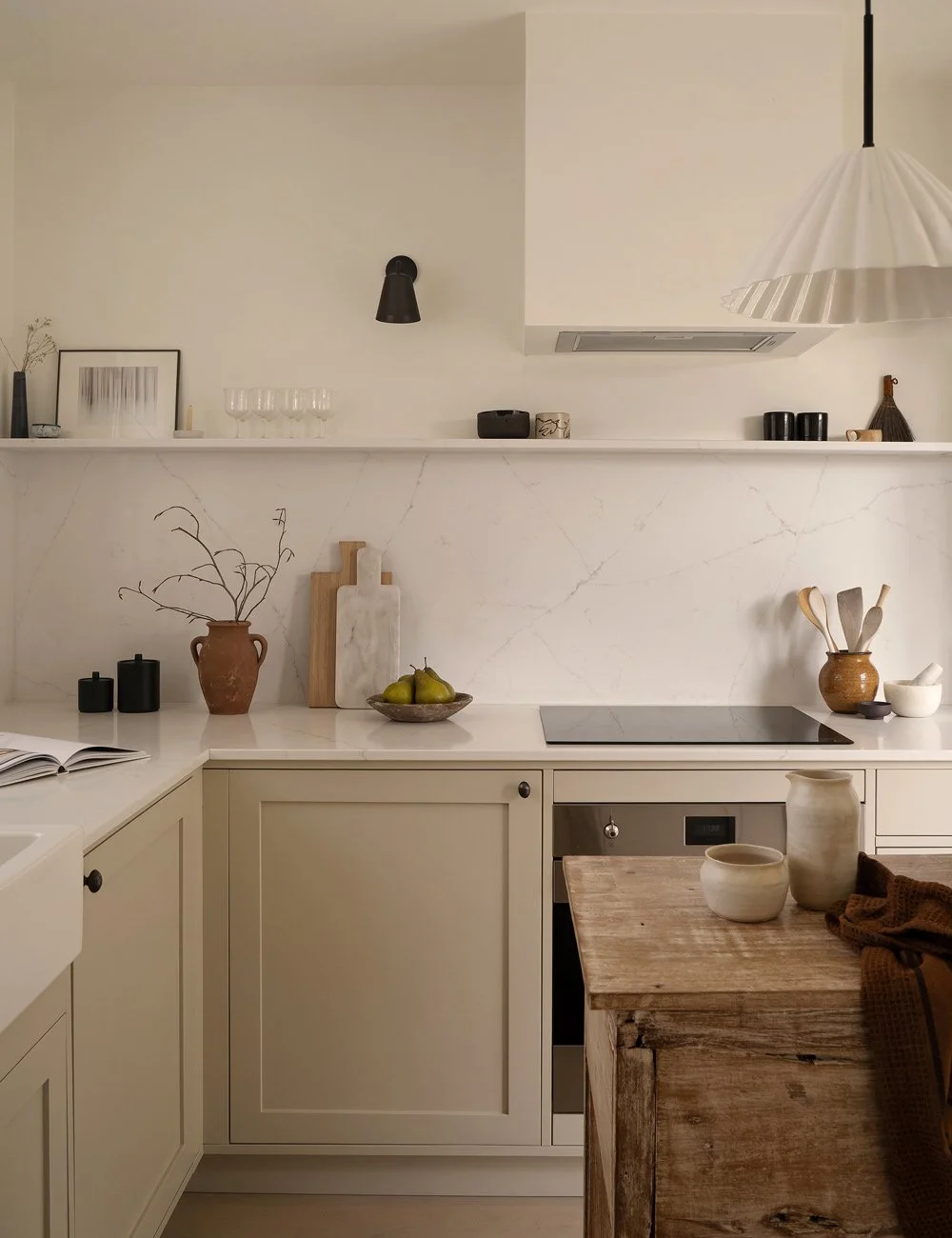
Light brown oak, antique steel and soft white cabinetry – a beautiful combo adding warmth, character and a soft, minimalist aesthetic in the kitchen.
Light brown oak with soft white and antique stainless steel
Pairing light brown oak with soft white cabinetry creates a calm and warm foundation, while an antique stainless steel worktop introduces a subtle contrast.
Compared with a more polished stainless steel surface, the antique finish has a softer expression that works particularly well alongside the natural grain and variation of oak. Using steel primarily for the worktop also allows it to become a distinct feature without dominating the kitchen.
Design tip: If you want to introduce stainless steel while maintaining a soft, warm expression, use it on one main surface and combine it with natural wood and muted colours. Rounded shapes and curved edges can further soften the look, creating a gentle contrast with the clean, precise character of the steel.
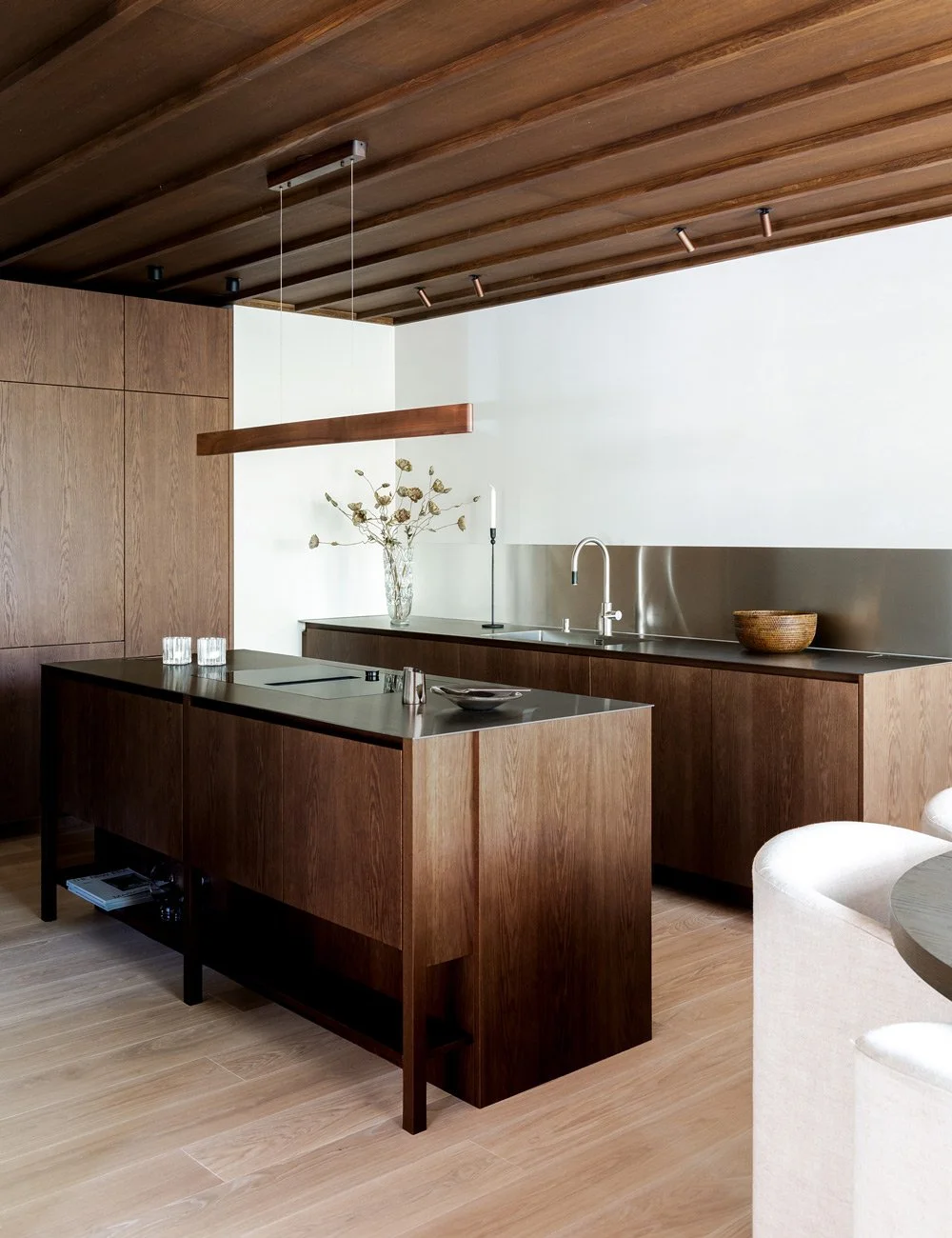
Red-brown oak cabinetry paired with stainless steel surfaces and clean lines creates a refined, architectural space that balances warmth, function and character.
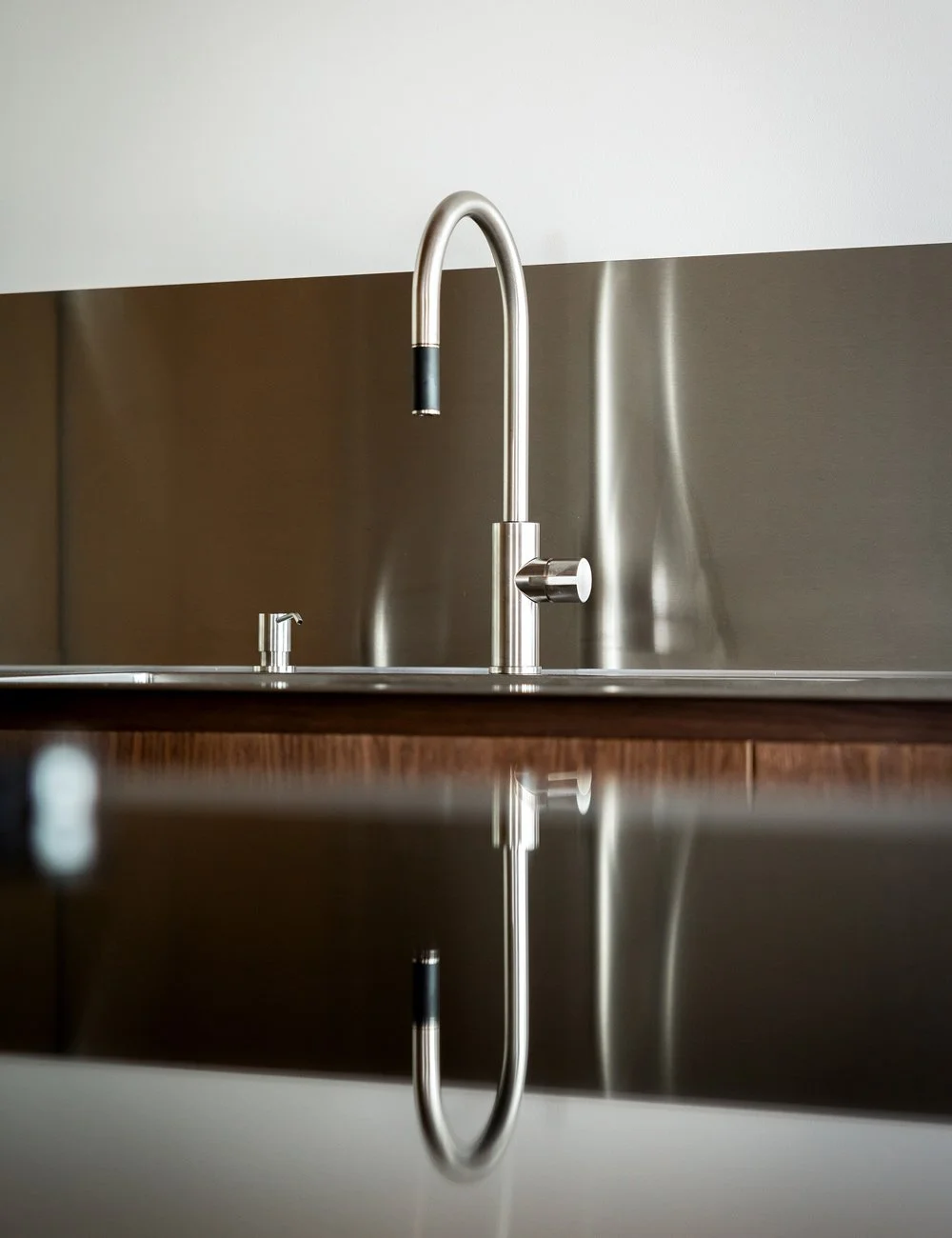
The contrast between the materials brings out their distinct qualities: the steel feels cooler and more precise, while the oak adds warmth, depth and richness.
Red-brown oak and stainless steel in a Mid-Century Modern kitchen
The deeper tones of red-brown oak create a particularly striking contrast with stainless steel. The warmth and richness of the wood balance the cooler appearance of the metal, resulting in a kitchen with both depth and definition.
This material combination works naturally in a Mid-Century Modern kitchen, where warm wood tones and functional materials are characteristic elements of the aesthetic. Rather than competing, the two materials emphasise each other's qualities: the steel appears cooler and more precise, while the oak feels richer and warmer.
Design tip: Darker or red-toned woods create a stronger contrast with stainless steel than pale oak, making them a good choice when you want the material combination to be a defining part of the kitchen design.

The stainless steel kitchen island becomes a natural focal point, while also serving as a contemporary room divider.
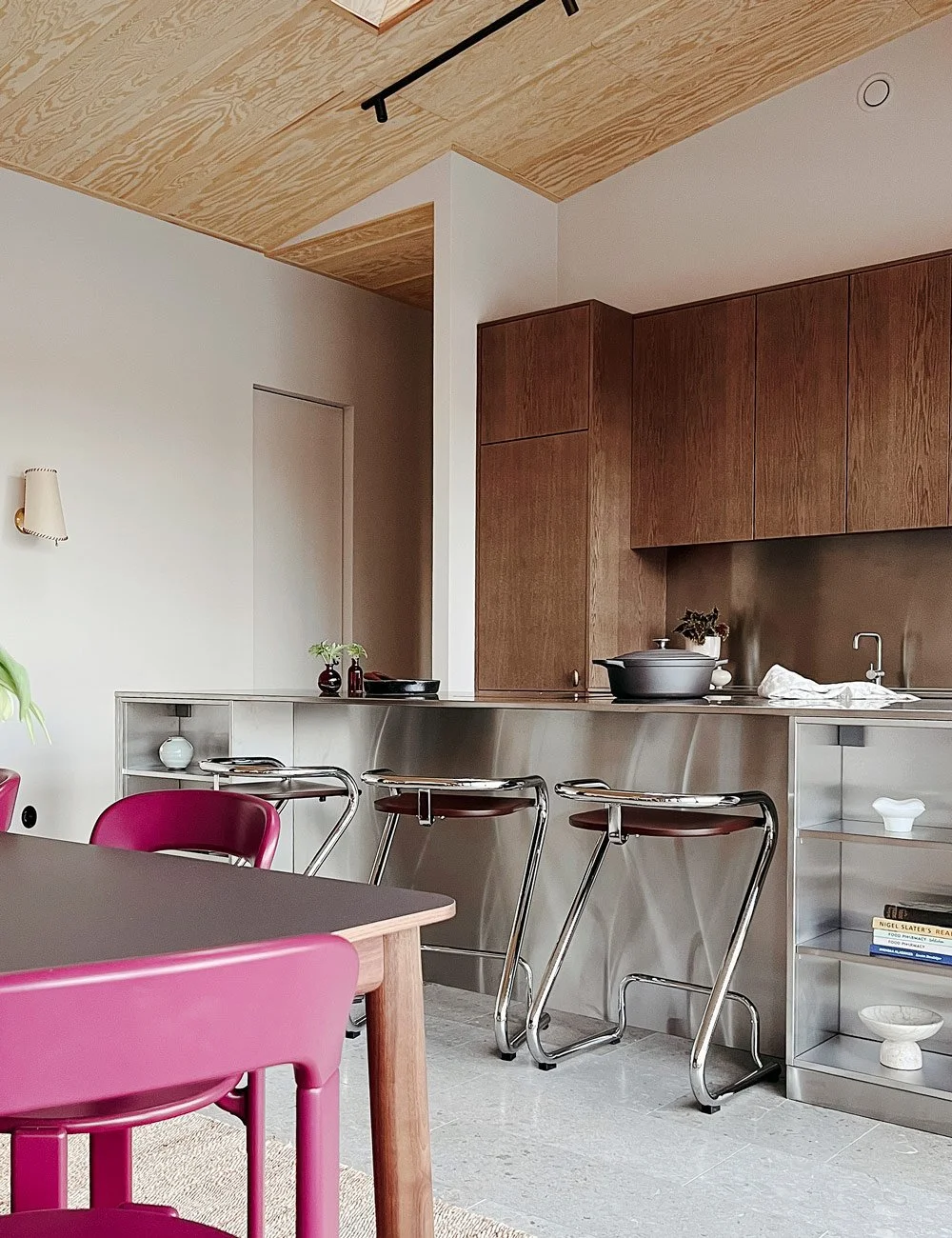
Warm oak cabinetry is paired with a stainless steel kitchen island, giving each material its own space while creating a distinct contrast within the kitchen.
A stainless steel kitchen island with warm oak cabinetry
A stainless steel kitchen island is an effective way to make the material a focal point. Surrounded by warm oak cabinetry, the island stands out as a distinct element while remaining balanced by the natural character of the wood.
This approach also creates a clear division between materials: instead of combining wood and steel across every surface, each material is given its own space. The result is a strong yet considered contrast between the warm cabinetry and the cooler, more industrial character of the island.
Design tip: If you want stainless steel to have a prominent role in the kitchen, consider concentrating it on one larger element, such as the kitchen island, and letting wood dominate the surrounding cabinetry.

Repeating the stainless steel across the worktop, splashback and open shelving adds a contemporary edge while allowing the light oak to remain the dominant material.
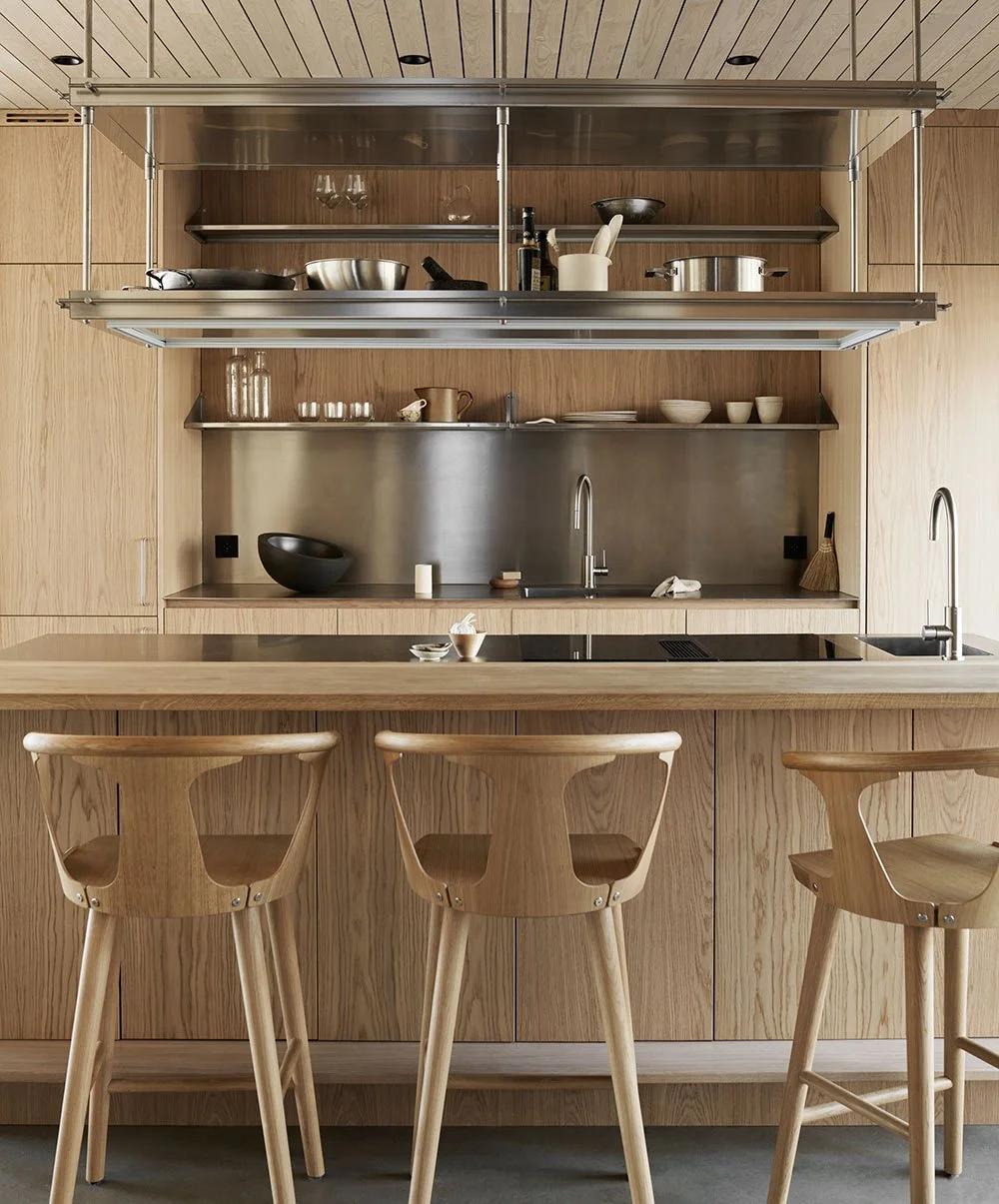
Light oak and stainless steel create a soft, understated contrast – a natural pairing for a bright, Scandinavian kitchen.
Light oak with stainless steel worktop, splashback and open shelving
Light oak pairs particularly well with stainless steel when you want to create a bright, Scandinavian feel with subtle contrasts. Rather than creating a strong divide between warm wood and cool metal, the pale oak gives the combination a softer, more understated character.
Here, stainless steel is repeated across the worktop, splashback and open shelving, creating a consistent thread throughout the kitchen. The light oak cabinetry remains the dominant material, while the steel adds clean lines and a contemporary touch without overpowering the space.
Design tip: For a softer Scandinavian look, pair stainless steel with pale woods such as light oak. Keeping the contrast between the materials subtle creates a calm, cohesive feel while still allowing the stainless steel details to stand out.
Frequently asked questions
How does the wood tone affect the look of stainless steel?
The tone of the wood can significantly change how stainless steel is perceived in a kitchen. Lighter woods create a softer, more understated contrast, while darker and red-toned woods bring greater depth and make the difference between the two materials more pronounced.
At Nordiska Kök, our wood kitchens are available in nine carefully developed wood tones, ranging from pale, white-pigmented oak to deep, dark brown shades. Our wooden kitchens can also be painted in a colour of your choice while allowing the natural grain of the wood to remain visible.
Find wood kitchen inspiration or learn more about our wood tones.
Which wood works best with stainless steel?
Oak is a versatile choice to combine with stainless steel because its natural grain and warm tones contrast with the smooth, cooler surface of the metal. However, the shade of the oak has a significant impact on the overall expression.
Light oak creates a softer, more Scandinavian look, while red-brown or darker oak provides greater contrast and a warmer, more distinctive character. The right combination therefore depends on whether you want the stainless steel to blend naturally into the kitchen or stand out as a defining design feature.
How do you make a stainless steel kitchen feel warmer?
One of the most effective ways to soften stainless steel is to combine it with natural materials. Wood cabinetry introduces warmth, texture and variation, balancing the more precise appearance of steel.
The proportion of each material matters too. A single stainless steel worktop creates a subtle contrast, while using steel for the kitchen island, splashback and shelving gives it a much stronger presence. By adjusting this balance, stainless steel can work equally well as an accent or as one of the kitchen's main materials.
How do you combine wood and stainless steel in a kitchen?
There is no single way to combine wood and stainless steel. The key is to consider the tone of the wood, the finish of the steel and how much of each material you want to see.
For a softer expression, pair light oak with selected stainless steel details. For greater contrast, combine steel with darker or red-brown oak. And if stainless steel is intended to define the kitchen, repeat it across larger surfaces or make it the focal point of the kitchen island.
Together, wood and stainless steel offer a versatile material palette where natural warmth meets clean, functional design.
Discover more stainless steel kitchen ideas and find kitchen inspiration for your own kitchen.
Learn more about the process of ordering a kitchen from Nordiska Kök.